

Evening is more than the space left over after a busy day. It is a transition of its own—a chance to soften stimulation, acknowledge what has been carried, and prepare the body and mind for rest. Ayurvedic tradition places value on daily rhythm, but an evening routine does not need to be elaborate or rigid to feel supportive.
The six rituals below are gentle invitations rather than rules. Choose the ideas that fit your life, simplify them when needed, and let repetition create familiarity over time.
1. Give the day a clear closing point
Work can easily follow us from one room to another, especially when a phone or laptop is always within reach. Create one small action that marks the end of your working day: close the computer, clear one surface, change into comfortable clothes, or write tomorrow’s first task on a note.
This boundary does not have to happen at the same hour for everyone. The purpose is simply to help the mind recognize that one mode of the day is ending and another is beginning.
2. Let the light grow softer
As evening arrives, reduce harsh overhead lighting where practical and choose warmer, lower lamps. The CDC includes turning off electronic devices at least 30 minutes before bedtime among habits that may support healthy sleep. If a complete screen-free period is unrealistic, try lowering brightness, finishing the most stimulating tasks earlier, or placing the phone beyond arm’s reach.
Think in terms of gradual change rather than a sudden blackout. A softer visual environment can become a simple cue that the pace is shifting.
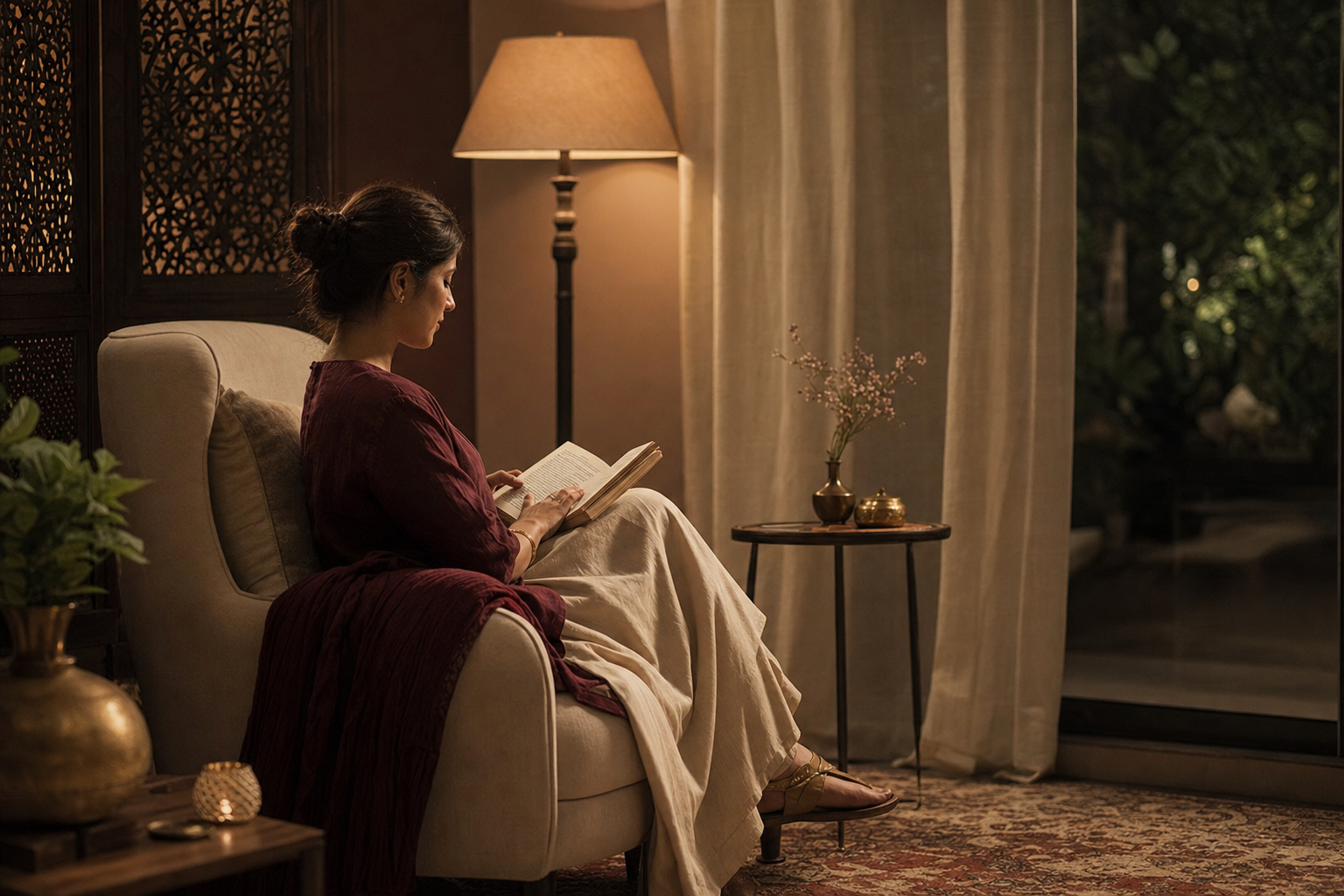
3. Choose warmth and simplicity
Ayurvedic-inspired evening routines often emphasize warmth, comfort, and reduced stimulation. That might mean a warm shower, soft socks, a light blanket, or a comfortably warm caffeine-free drink that is appropriate for you.
You do not need a complicated herbal blend. Herbs and supplements can interact with medicines or be unsuitable during pregnancy, nursing, or certain health conditions. Plain warm water may be the most uncomplicated choice; ask a qualified healthcare professional about any product you plan to use regularly.
4. Release a little physical tension
After hours of sitting, standing, commuting, or caregiving, the body may benefit from a few easy movements. Roll the shoulders, gently turn the head from side to side, stretch the hands, or walk slowly through the room. Keep the range comfortable and stop if anything hurts.
This is not a workout to complete or a flexibility goal to reach. Two or three minutes of attentive movement can be enough to notice where effort is still being held.
5. Make space for quiet attention
Select one low-stimulation activity that helps you settle: reading a few pages, listening to calm audio, folding tomorrow’s clothes, writing three lines in a journal, or sitting quietly with the breath. If you choose breathing practice, keep it natural and unforced.
Relaxation techniques may support a sense of calm, but they are not replacements for medical or mental health care. If a practice increases anxiety, dizziness, breathlessness, or discomfort, stop and return to normal breathing. Seek professional guidance when symptoms persist.
6. Prepare one kindness for morning
Before bed, do one small thing that makes tomorrow gentler. Fill a water glass, set out breakfast dishes, place keys by the door, or write a short reminder. The task should take only a minute or two.
This final ritual connects evening and morning without turning rest into another productivity project. It says, in a practical way: I can care for the person who will wake up tomorrow.
Consistency matters more than complexity
Healthy sleep depends on many factors, and no ritual can guarantee a perfect night. The CDC recommends consistent sleep and wake times, a quiet and comfortable bedroom, regular movement, and avoiding large meals, alcohol, and afternoon or evening caffeine. Use these as broad foundations, then shape an evening rhythm that respects your schedule, household, culture, and health needs.
If you regularly struggle to fall asleep, wake repeatedly, or remain tired despite enough time in bed, speak with a healthcare professional. Persistent sleep problems deserve assessment—not simply a more disciplined routine.
Begin with the easiest change: dim one light, close one screen, or sit quietly for one minute. A softer evening is not created by doing everything. It is created by giving the day permission to become less.
Further reading
- About Sleep — Centers for Disease Control and Prevention
- Relaxation Techniques for Stress — National Center for Complementary and Integrative Health
- Ayurvedic Medicine: In Depth — NCCIH
PRANA provides general educational wellness content and does not provide medical diagnosis or treatment. Consult a qualified healthcare professional regarding personal health concerns.