
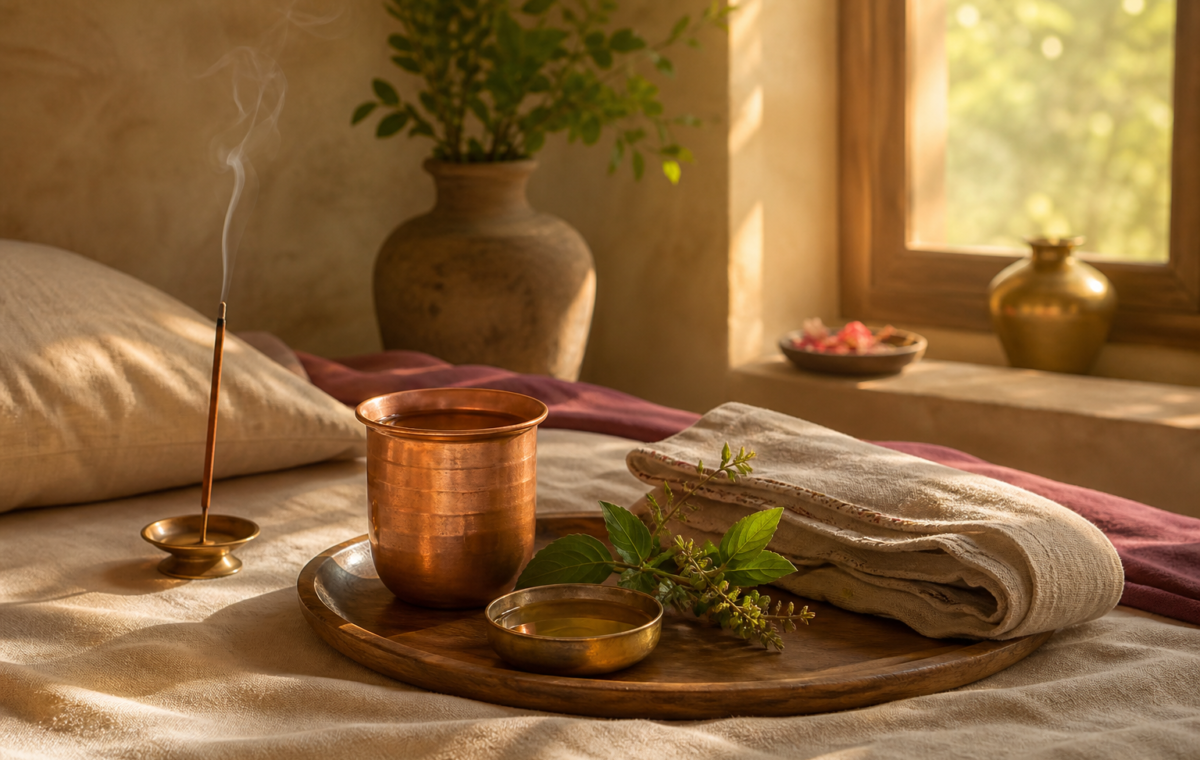
A morning routine does not need to be elaborate to feel meaningful. In Ayurveda, the idea of dinacharya refers to daily practices that help create steadiness and rhythm. Rather than treating the morning as a checklist, it can be approached as a quiet transition: from sleep into movement, from inward stillness into the activity of the day.
The seven rituals below are intentionally simple. Choose one or two that feel supportive, adapt them to your needs, and let consistency matter more than perfection.
1. Begin before the noise
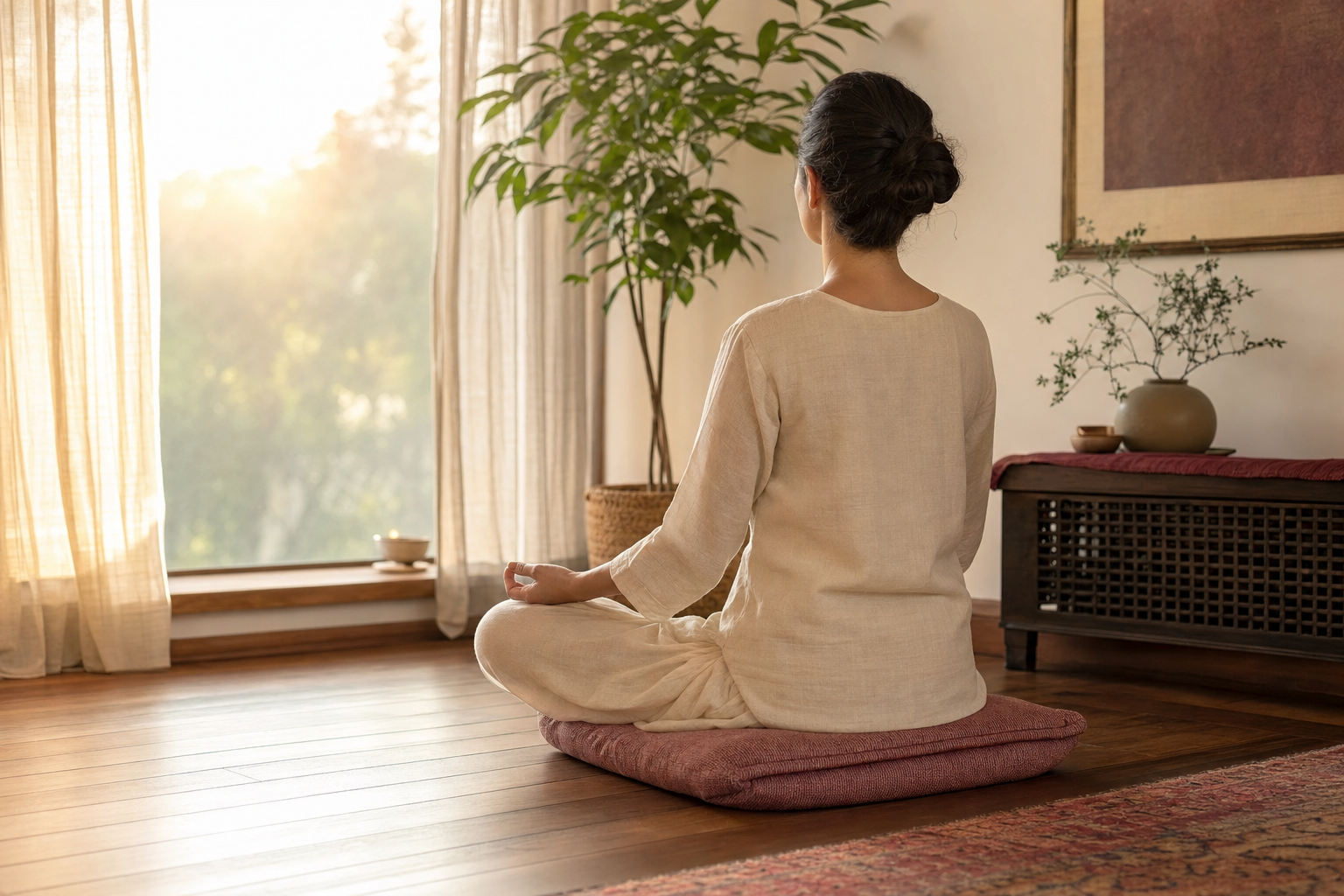
If possible, give yourself a few moments before opening messages, news, or social media. Sit up, notice the quality of your energy, and take in the room around you. This small pause creates a boundary between rest and the demands of the day.
You do not need to wake at a particular “perfect” hour. A regular sleep and wake schedule is more useful than forcing a routine that leaves you depleted. The CDC recommends maintaining consistent sleep and wake times and getting natural light earlier in the day as part of healthy sleep habits.
2. Drink something warm
A cup of comfortably warm water can be a pleasant way to rehydrate after sleep. Sip slowly rather than turning it into another task to complete. Plain water is enough; there is no need to add herbs, powders, or strong ingredients unless they are appropriate for you.
Ayurvedic traditions often value warmth in the morning, but your body and medical needs come first. Follow any fluid guidance given by your healthcare professional.
3. Meet the morning light
Open the curtains, step onto a balcony, or take a brief walk outside. Natural morning light can help reinforce the distinction between daytime and nighttime. Let this be an uncomplicated ritual: look at the sky, notice the temperature, and allow your eyes to receive daylight without staring directly at the sun.
4. Care for the senses
Ayurvedic self-care frequently includes cleansing practices. A modern, gentle version might include brushing your teeth, washing your face, rinsing your mouth, and taking a comfortable shower. These familiar acts can become grounding when they are done with attention rather than haste.
Some traditional practices involve oils, herbs, or specialized preparations. “Natural” does not automatically mean safe for every person. If you are pregnant, nursing, managing a health condition, taking medication, or considering an ingestible Ayurvedic product, speak with a qualified healthcare professional first.
5. Add a little movement
Choose movement that matches how you actually feel. That might be shoulder rolls, a few gentle stretches, a slow walk, or a short mobility sequence. The intention is not to chase intensity; it is to help the body transition out of sleep.
On lower-energy mornings, two minutes may be enough. On other days, you may naturally want more. A sustainable practice makes room for both.
6. Take five comfortable breaths
Sit or stand in a relaxed position. Let the breath move naturally, then gently slow it without straining or holding. Notice the inhale, notice the exhale, and allow your jaw and shoulders to soften. Five attentive breaths can be a complete practice.
Research on relaxation practices suggests that slow breathing may support a sense of calm, though it is not a treatment for a medical or mental health condition. Stop if you feel dizzy, short of breath, or uncomfortable. People with respiratory, cardiovascular, or other health concerns should ask a clinician about suitable breathing practices.
7. Choose one intention
Before moving fully into your schedule, decide how you would like to meet the day. Keep the intention practical and within your control:
- I will pause before answering.
- I will eat lunch away from my screen.
- I will make space for one quiet moment.
An intention is not a prediction that the day will go smoothly. It is simply a direction you can return to when the pace begins to quicken.
Build a rhythm that belongs to you
A supportive morning routine should fit your season of life. Caregiving, shift work, chronic illness, disability, young children, travel, and many other realities affect what is possible. Ayurveda’s emphasis on observing qualities and patterns can be used as an invitation to adapt—not as a reason to judge yourself.
Start with the ritual that feels easiest. Practice it for a week. If it genuinely supports you, keep it; if it creates stress, simplify it. The most nourishing rhythm is often the one you can return to with kindness.
This article is for general education and does not provide medical diagnosis or treatment. Ayurvedic products and preparations can carry risks, including contamination with heavy metals. Do not use complementary practices to delay conventional care, and consult a qualified healthcare professional about personal health concerns.
Further reading
- Ayurvedic Medicine: In Depth — National Center for Complementary and Integrative Health
- Relaxation Techniques for Stress — NCCIH
- Sleep and Heart Health — Centers for Disease Control and Prevention
PRANA provides general educational wellness content and does not provide medical diagnosis or treatment. Consult a qualified healthcare professional regarding personal health concerns.