Maintaining a balanced lifestyle can feel challenging when daily responsibilities, irregular eating habits, poor sleep, and constant screen time become part of everyday life. Many people are now exploring traditional wellness practices and natural products to create healthier routines without making complicated lifestyle changes. Ayurveda offers an approach that focuses on daily habits, mindful living, and understanding individual needs.
Ayurvedic wellness products include a variety of traditional herbs, herbal teas, massage oils, personal care essentials, and wellness accessories used in Ayurvedic lifestyles. These products can complement everyday self-care when selected thoughtfully. For people across the United States interested in traditional Indian wellness practices, understanding how these products work and how to incorporate them into daily routines is a useful starting point.
What Are Ayurvedic Wellness Products?
Ayurvedic wellness products are items inspired by Ayurveda, a traditional Indian system of health and well-being that emphasizes balance between the body, mind, lifestyle, and environment. They include herbal preparations, natural oils, teas, skincare essentials, and accessories associated with traditional daily practices.
Unlike a routine built around a single product, Ayurveda considers several aspects of everyday living, including food choices, sleep patterns, personal care, and physical activity.
Some commonly explored product categories include:
- Ayurvedic herbs: Ingredients such as ashwagandha, tulsi, turmeric, and triphala, traditionally used in different Ayurvedic preparations.
- Herbal teas: Plant-based beverages prepared with ingredients such as ginger, tulsi, and other herbs.
- Ayurvedic oils: Traditional massage and personal care oils used in self-care rituals.
- Natural skincare: Cleansers, soaps, and botanical preparations inspired by traditional practices.
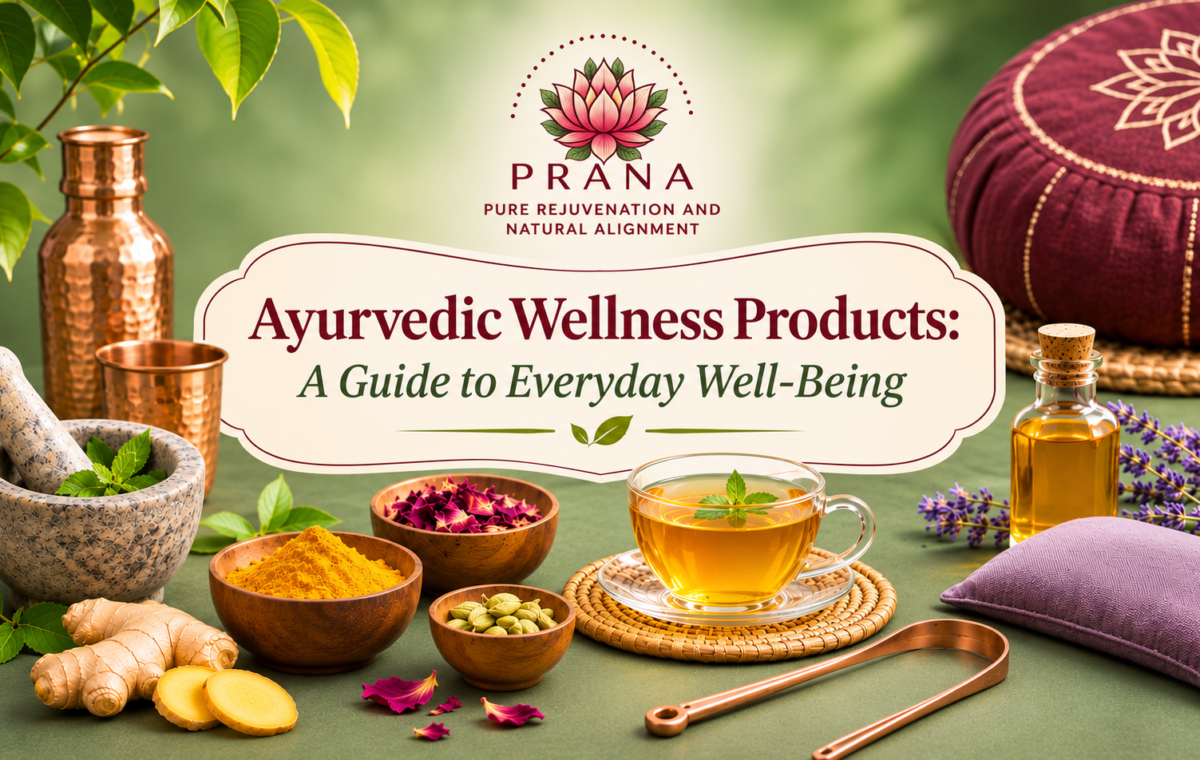
- Wellness accessories: Copper tongue cleaners, meditation accessories, and other items associated with daily Ayurvedic routines.
Understanding the ingredients, intended uses, and product quality is important before incorporating anything into your routine.
Understanding the Meaning of Prana
The prana meaning in Ayurveda and related Indian traditions is commonly understood as vital life energy. It is associated with breathing, movement, vitality, and the relationship between the body and mind. Prana is an important concept in yoga and traditional wellness philosophies.
What Is Prana in Everyday Wellness?
If you are wondering what prana is, it refers to the life-sustaining energy traditionally associated with breath and living processes. Practices such as mindful breathing, meditation, and yoga are often used to develop awareness of this concept. It represents a broader approach to well-being rather than a physical product or measurable medical substance.
How to Choose and Use Ayurvedic Products in Your Daily Routine
There is no universal number of products that everyone needs. Beginners can start with a few suitable essentials and gradually understand which traditional practices fit their lifestyle, preferences, and individual needs.
Choosing thoughtfully is more useful than purchasing several products without understanding their purpose.
1. Identify Your Everyday Needs
Start by considering the areas of your routine you want to improve. For example, you might be interested in personal care, relaxation, mindful mornings, or traditional herbal beverages.
Your choices should reflect your daily habits rather than popular product trends.
2. Understand Ingredients and Product Labels
Read product descriptions carefully. Look for complete ingredient lists, manufacturer information, usage directions, expiration dates, and relevant quality certifications.
For herbal supplements, check the recommended serving size and possible interactions with medications. Natural ingredients are not automatically safe for everyone.
3. Build a Simple Morning Routine
A morning routine can include drinking water, brushing your teeth, practicing mindful breathing, and spending a few minutes stretching.
You may also explore Ayurvedic daily essentials, such as tongue cleaners, herbal teas, massage oils, and meditation accessories, depending on your preferences.
4. Introduce Products Gradually
Avoid introducing multiple new supplements or skincare products at once. Starting with one product makes it easier to identify sensitivities and understand whether it suits your routine.
For supplements and medicinal herbs, consult a qualified healthcare professional before use, particularly if you have an existing medical condition, take medication, or are pregnant.
Natural Detox Practices and Their Place in Ayurveda
Traditional Ayurveda places importance on digestion, daily habits, and maintaining a consistent lifestyle. However, the modern idea of detoxification is often misunderstood.
The body already has natural systems, particularly the liver and kidneys, that process and eliminate waste. Commercial detox products, restrictive diets, and unverified cleansing programs are not necessary for these processes.
Understanding Natural Detox Methods
Natural detox methods can refer to everyday habits such as drinking sufficient water, eating a varied diet, getting adequate sleep, and maintaining regular physical activity. These habits support normal bodily functions without relying on extreme cleansing practices.
Traditional Ayurvedic approaches may also discuss dietary routines, herbal preparations, and seasonal lifestyle practices. Their suitability depends on individual circumstances, and intensive cleansing procedures should never be attempted without appropriate professional supervision.
What Are the Benefits of Following Ayurvedic Lifestyle Practices?
Ayurveda encourages people to pay attention to daily habits and develop routines that support a balanced lifestyle. Its traditional principles can offer a framework for understanding self-care, although specific health claims should be supported by reliable scientific evidence.
Some commonly discussed benefits of ayurveda include:
- Greater awareness of daily habits: Encourages attention to food, sleep, activity, and personal care.
- Consistent self-care routines: Promotes regular practices rather than occasional wellness activities.
- Mindful living: Connects breathing exercises, meditation, and relaxation with everyday life.
- Interest in traditional ingredients: Introduces people to herbs, oils, and botanical preparations.
- Individual lifestyle awareness: Recognizes that personal routines and preferences differ.
Ayurveda is a traditional wellness system, not a substitute for evidence-based medical care. Herbal products should not be treated as guaranteed solutions for health conditions.
Understanding Ayurvedic Treatments and Traditional Practices
Ayurveda includes several traditional approaches involving lifestyle guidance, dietary practices, herbal preparations, and specialized procedures. Their methods and suitability can vary depending on the individual’s circumstances.
Ayurvedic treatments may include traditional therapies such as Abhyanga (oil massage), Shirodhara, and Panchakarma procedures. These practices should be understood in their traditional context, and specialized procedures require assessment and supervision by appropriately qualified practitioners. Avoid treatments involving unverified substances or unsafe cleansing methods.
The Role of Ayurvedic Massage in Daily Self-Care
Oil massage has a long-standing place in traditional Ayurvedic routines. Abhyanga is a traditional practice involving the application of oil to the body, often as part of personal care and relaxation.
Ayurvedic massage generally refers to massage practices inspired by traditional Ayurvedic principles. The oils, techniques, and duration may differ depending on the method and individual preferences.
For everyday self-care, people may explore simple oil application practices using products intended for external use. Always check the ingredients, follow product directions, and perform a patch test before applying a new oil. Avoid using massage as a replacement for medical assessment or treatment.
How to Learn Ayurveda and Understand Its Principles
Learning Ayurveda does not require understanding every traditional concept at once. Beginners can start by exploring its history, foundational principles, commonly discussed herbs, and daily lifestyle practices.
How to Learn Ayurveda as a Beginner
If you are interested in how to learn ayurveda, begin with reliable introductory resources that explain concepts such as doshas, Dinacharya (daily routine), seasonal practices, and traditional food principles.
A structured learning approach can help you distinguish traditional knowledge from unsupported wellness claims. Look for educational materials that explain both the cultural context and the limitations of available scientific evidence.
Exploring Ayurveda Courses Online
People interested in more structured learning can explore ayurveda courses online covering introductory Ayurvedic philosophy, herbs, traditional nutrition, and lifestyle practices. Before enrolling, check the instructor’s qualifications, course curriculum, learning outcomes, and whether the program provides recognized professional credentials. An introductory course should not be confused with a qualification to diagnose or treat medical conditions.
How to Create a Simple Ayurvedic Daily Routine
A practical routine should be easy to maintain and flexible enough to fit your schedule. You do not need an extensive collection of products to explore traditional wellness practices.
Here is an example of how you can organize your day:
Morning
- Wake up at a consistent time.
- Clean your teeth and consider using a tongue cleaner.
- Drink water and spend a few minutes practicing mindful breathing.
- Enjoy a balanced breakfast.
- Use suitable personal care products.
Afternoon
- Eat regular, balanced meals.
- Take short movement breaks.
- Stay hydrated throughout the day.
- Make time for outdoor activity when possible.
Evening
- Reduce screen time before bed.
- Explore meditation or gentle stretching.
- Follow a simple skincare or personal care routine.
- Maintain a consistent bedtime.
The goal is consistency, not perfection. Adjust your routine according to your schedule, comfort, and individual needs.
Why Explore PRANA Natural Alignment in the United States?
For readers across the United States who want to understand traditional Indian wellness practices, reliable educational information and transparent product details can make exploring Ayurveda easier.
PRANA Natural Alignment brings together an interest in traditional Ayurvedic knowledge, mindful living, and everyday wellness essentials. Its online shop introduces visitors to different product categories, including herbs and supplements, daily ritual accessories, meditation essentials, kitchen products, and sleep and relaxation items.
When exploring an Ayurvedic collection, consider a few important factors:
- Product transparency: Check ingredient lists, descriptions, and usage instructions.
- Quality information: Look for manufacturing details and relevant testing or certification information.
- Traditional context: Understand how an ingredient or accessory is used in Ayurvedic practices.
- Practical suitability: Choose products that align with your preferences and everyday routine.
- Responsible use: Review safety information and seek qualified healthcare advice when necessary.
Exploring Ayurveda should be an informed process. Understanding the purpose of a product is just as important as knowing what it contains.
Conclusion:
Ayurveda offers a traditional perspective on everyday well-being through mindful habits, balanced routines, and an understanding of natural ingredients. Exploring herbs, oils, teas, and wellness accessories can help you learn more about these practices while developing a personal self-care routine.
The most useful starting point is to understand what each product is designed for, check its ingredients, and make informed decisions instead of following every wellness trend.
Explore the traditional wellness collection at PRANA Natural Alignment to discover Ayurvedic products and everyday essentials that complement your interest in mindful living. Choose thoughtfully, learn at your own pace, and build a routine that works for your lifestyle.
Frequently Asked Questions
1. What are the most commonly used Ayurvedic wellness products?
Common categories include herbal preparations, Ayurvedic oils, herbal teas, natural personal care products, and traditional wellness accessories. The right selection depends on individual preferences, intended use, and product safety.
2. Can Ayurvedic wellness products be used every day?
Some products, such as certain personal care items and wellness accessories, may fit into daily routines when used as directed. Herbal supplements and medicinal preparations require more careful consideration because of possible side effects and medication interactions.
3. How much do Ayurvedic wellness products cost?
Prices vary according to ingredients, formulation, product size, manufacturing standards, and brand. Compare ingredient lists, quantities, and quality information rather than selecting products based on price alone.
4. Where can I find Ayurvedic wellness products near me?
You can explore local wellness retailers, specialty herbal stores, and reputable online Ayurvedic shops. Check product authenticity, ingredient transparency, customer information, and shipping policies before purchasing.
5. Which Ayurvedic products are suitable for beginners?
Beginners can explore simple categories such as herbal teas, personal care products, meditation accessories, and traditional self-care essentials. Start with products that have clear instructions and avoid introducing multiple herbal supplements without professional advice.
This article is general educational writing about Ayurveda and mindful living. It is not medical advice, diagnosis or treatment, and it is not tailored to your circumstances.
Ayurveda is a traditional system of knowledge. Descriptions of traditional use reflect longstanding practice and have not been evaluated by the Food and Drug Administration.
Before starting any new practice, herb, oil or dietary change — particularly if you are pregnant or nursing, managing a health condition, or taking prescription medication — talk with your physician or another qualified healthcare provider.
In an emergency, call 911. If you are in emotional distress or crisis, the 988 Suicide and Crisis Lifeline is available by calling or texting 988.