
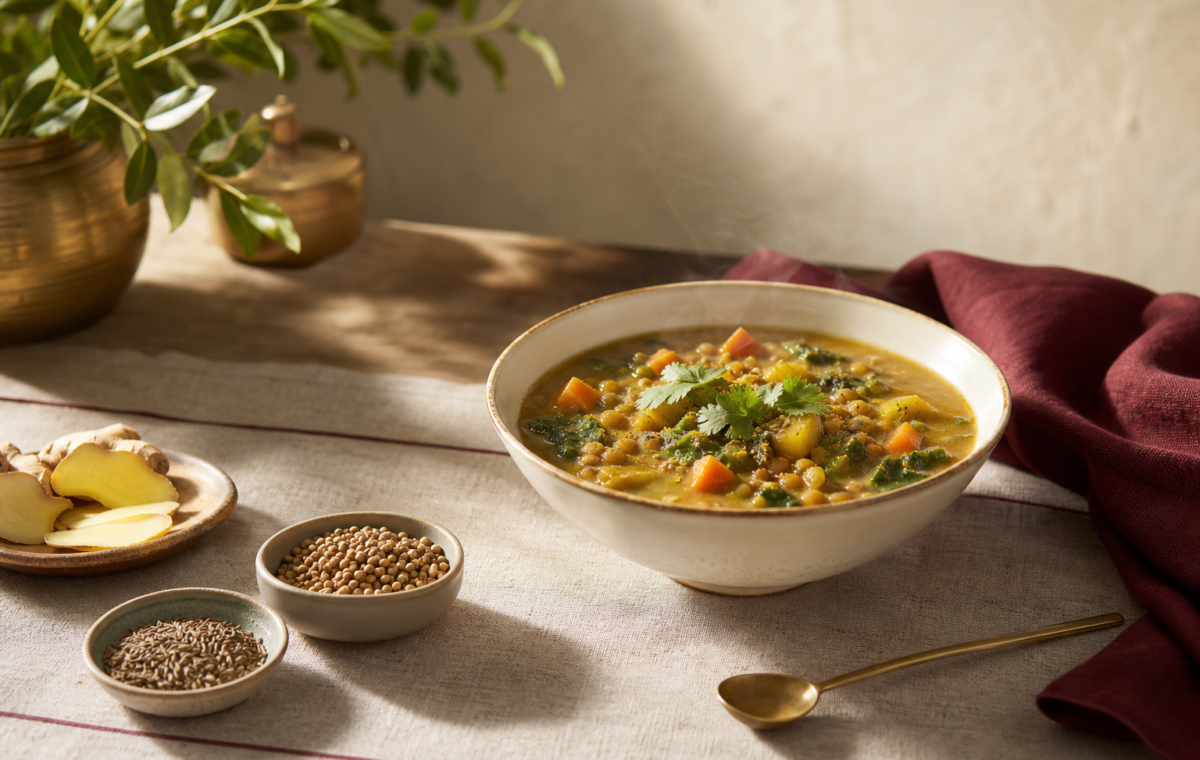
In Ayurveda, meals are about more than ingredients. They are also shaped by rhythm, attention, appetite, and the way we feel after eating. At the center of this traditional perspective is agni, a Sanskrit word often translated as “fire.”
Agni is best understood as an Ayurvedic concept or metaphor—not an anatomical organ, a medical diagnosis, or a substitute for modern digestive science. Used gently, it can offer a simple lens for noticing how everyday habits affect our experience of nourishment.
What does agni mean in Ayurveda?
Traditional Ayurvedic teachings use agni to describe the body’s capacity to receive, transform, and make use of food and experience. A steady “digestive fire” is traditionally associated with a comfortable appetite, ease after meals, and a sense of clarity. When that rhythm feels unsettled, Ayurveda may describe agni as irregular, overly intense, or low.
These descriptions belong to Ayurveda’s traditional framework. Modern medicine explains digestion through the coordinated work of the gastrointestinal tract, nervous system, hormones, enzymes, liver, pancreas, and other organs. The two systems use different language and should not be treated as interchangeable.
A lens for observation—not a score
You do not need to label your agni or fit yourself into a type to benefit from paying attention at mealtimes. The most useful starting point is curiosity. Are you comfortably hungry? Are you rushing? Does a particular portion leave you satisfied, or overly full? Do your routines change on stressful or unusually busy days?
These observations are not a test, and one meal does not define your wellbeing. Appetite and digestion naturally vary with sleep, activity, stress, illness, medication, travel, and many other factors. Let what you notice guide sensible questions rather than rigid rules.
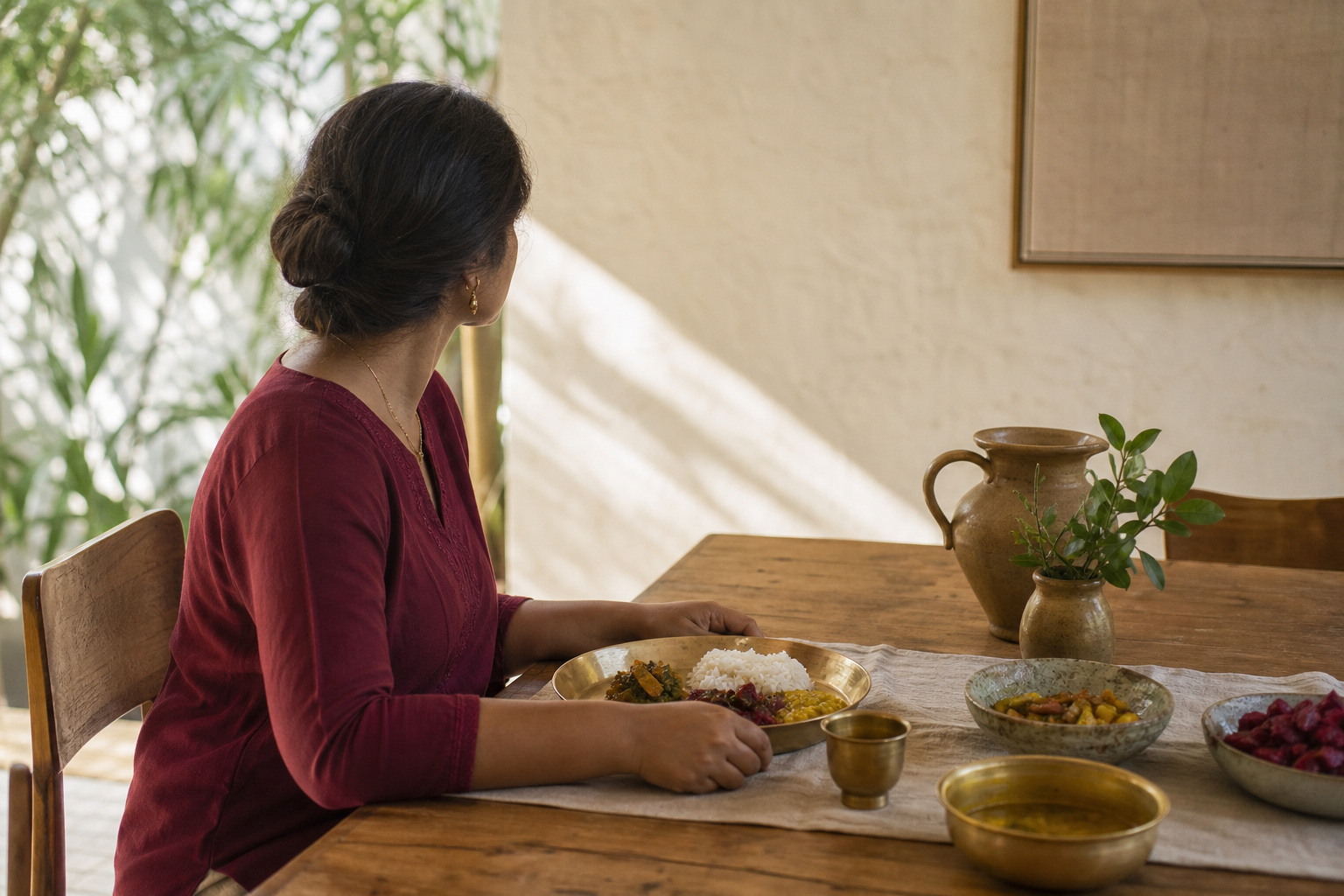
Five gentle ways to support a steadier meal rhythm
1. Create a little consistency
When practical, eat at broadly familiar times instead of letting every meal become an afterthought. Consistency does not require a strict clock. It simply gives meals a more intentional place in the day.
2. Pause before the first bite
Take one slow breath, notice the aroma and appearance of your food, and let yourself arrive at the table. This brief transition can soften the momentum of a busy day without turning eating into another task to perfect.
3. Reduce one distraction
If screen-free meals feel unrealistic, begin with a smaller experiment: put your phone away for the first five minutes, close the laptop, or eat one snack without scrolling. Attention can be cultivated gradually.
4. Notice comfort as well as taste
Flavor matters, but so do hunger, fullness, energy, and physical comfort. Try noticing these signals without judgment. Over time, they may help you make portions and meal choices that feel more supportive to you.
5. Keep food guidance personal
Ayurvedic food traditions are diverse, and no single menu is right for everyone. Culture, allergies, medical needs, budget, access, preferences, and nutritional requirements all matter. If you need therapeutic nutrition advice, work with a qualified healthcare professional or registered dietitian who understands your circumstances.
What about spices and herbs?
Ginger, cumin, coriander, fennel, and other culinary spices often appear in Ayurvedic cooking. Enjoying familiar spices in ordinary food can be a pleasurable part of a varied diet. Concentrated extracts, supplements, and herbal formulas are different: they can interact with medicines, may not be appropriate during pregnancy or for certain conditions, and can vary in quality.
The U.S. National Center for Complementary and Integrative Health notes that evidence for many Ayurvedic health claims is limited and that some Ayurvedic preparations may contain harmful metals. Discuss supplements or therapeutic products with a qualified clinician rather than self-prescribing them.
Begin with one meal
You do not need to overhaul your kitchen to explore the spirit of agni. Choose one meal this week. Sit down, take a breath, and notice hunger, pace, taste, and comfort. That modest act of attention is enough.
Persistent or severe digestive symptoms—such as significant pain, repeated vomiting, blood in stool, difficulty swallowing, or unexplained weight loss—deserve medical evaluation. Ayurveda can be part of a personal wellness tradition, but it should not delay appropriate care.
Further reading
- Ayurvedic Medicine: In Depth — National Center for Complementary and Integrative Health
- Your Digestive System & How It Works — National Institute of Diabetes and Digestive and Kidney Diseases
This article is general educational writing about Ayurveda and mindful living. It is not medical advice, diagnosis or treatment, and it is not tailored to your circumstances.
Ayurveda is a traditional system of knowledge. Descriptions of traditional use reflect longstanding practice and have not been evaluated by the Food and Drug Administration.
Before starting any new practice, herb, oil or dietary change — particularly if you are pregnant or nursing, managing a health condition, or taking prescription medication — talk with your physician or another qualified healthcare provider.
In an emergency, call 911. If you are in emotional distress or crisis, the 988 Suicide and Crisis Lifeline is available by calling or texting 988.