
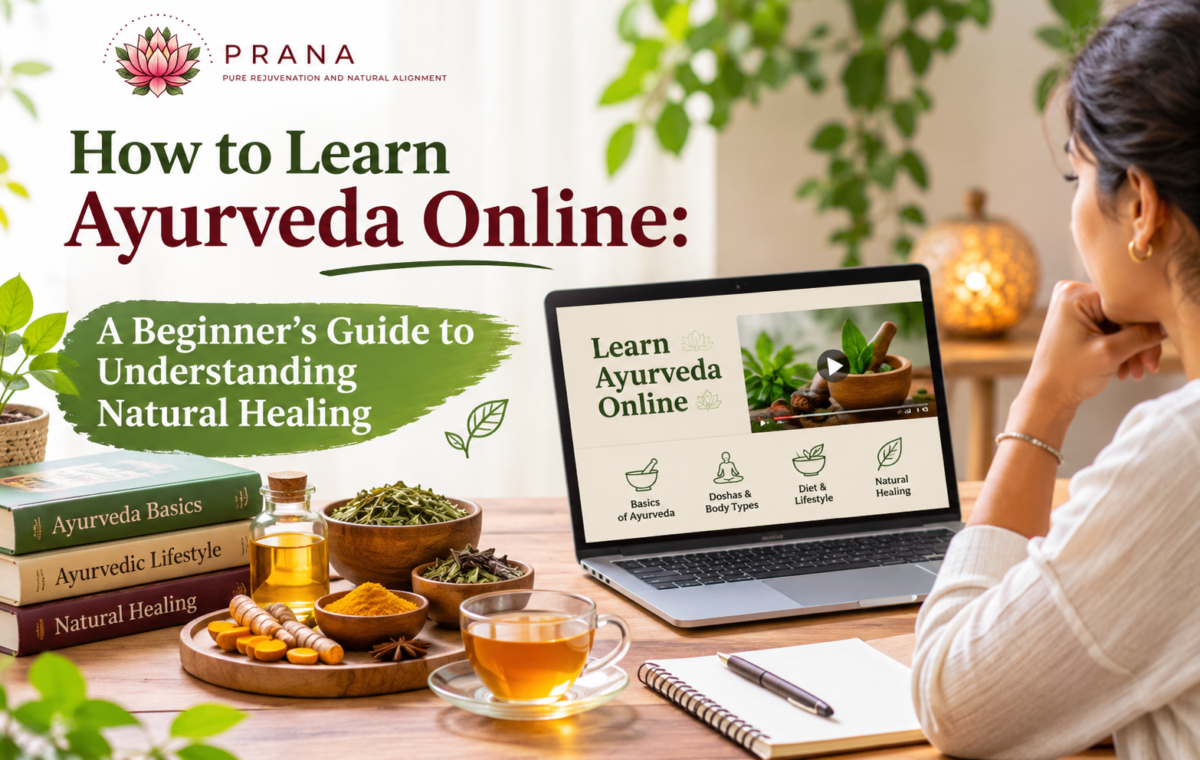
Ayurveda has been part of traditional Indian wellness practices for thousands of years. Its approach focuses on understanding the relationship between the body, mind, daily habits, food, and the surrounding environment. As interest in holistic wellness grows, more people want to understand these principles and apply simple practices to their everyday lives.
If you want to learn Ayurveda online, you do not need to begin with complicated terminology or advanced medical concepts. You can start by understanding the foundations, exploring the three doshas, learning about Ayurvedic nutrition, and discovering how daily routines influence overall well-being.
Online resources also make it easier to study at your own pace, revisit important concepts, and connect traditional knowledge with modern lifestyles. This beginner’s guide explains what to study first, how to approach an ayurveda learning course, and what to consider before exploring Ayurvedic treatments.
What Is Ayurveda and How Does It Approach Natural Healing?
Ayurveda is a traditional Indian system of healthcare whose name comes from two Sanskrit words: Ayur, meaning life, and Veda, meaning knowledge. Often described as the science of life, Ayurveda considers health through the relationship between physical well-being, mental balance, lifestyle, and the natural environment.
Rather than looking at individual habits in isolation, Ayurvedic philosophy considers how different aspects of daily life work together. Food choices, sleep patterns, physical activity, seasonal changes, and personal constitution are all part of this traditional approach.
Some important principles include:
- Doshas: Three functional principles known as Vata, Pitta, and Kapha.
- Agni: The traditional concept of digestive and metabolic fire.
- Prakriti: An individual’s constitution or natural characteristics.
- Dinacharya: Daily routines that encourage consistency and balance.
- Ritucharya: Seasonal practices that adapt daily habits to environmental changes.
Understanding these concepts gives beginners a foundation for exploring Ayurveda without feeling overwhelmed by unfamiliar terminology.
Can You Learn Ayurveda Online as a Beginner?
Yes. Beginners can explore many foundational Ayurvedic concepts through online educational resources, guided lessons, articles, recorded discussions, and structured learning programs.
The advantage of online learning is flexibility. You can study one topic at a time, take notes, revisit lessons, and gradually build an understanding of traditional Ayurvedic philosophy.
However, it is important to understand the difference between learning about Ayurveda and becoming qualified to practise it professionally. Reading educational material or completing an introductory course does not automatically qualify someone to diagnose conditions, prescribe medicines, or perform clinical treatments.
When starting your learning journey, focus on three areas:
- Understand the foundations: Learn about the history, philosophy, doshas, digestion, and individual constitution.
- Explore everyday applications: Study food habits, sleep, breathing practices, mindfulness, and daily routines.
- Recognise the limits of your knowledge: Understand which practices are suitable for general education and when professional healthcare guidance is necessary.
A well-organised learning path makes Ayurveda easier to understand and helps you distinguish traditional concepts from established scientific evidence.
What Should You Learn First When Studying Ayurveda Online?
Before exploring specialised subjects, it helps to understand a few fundamental concepts. These provide the context needed to make sense of more advanced Ayurvedic topics.
1. Understand the Three Doshas: Vata, Pitta, and Kapha
The three doshas are among the most recognised concepts in Ayurveda. They represent traditional functional principles used to describe different patterns within the body and mind.
Vata: Traditionally associated with movement, communication, and activity. It is connected with qualities such as lightness, dryness, and mobility.
Pitta: Associated with transformation, digestion, and metabolism. Its traditional qualities include warmth, intensity, and sharpness.
Kapha: Connected with structure, stability, and lubrication. It is traditionally associated with qualities such as heaviness, steadiness, and moisture.
According to Ayurvedic philosophy, every individual has all three doshas, although their proportions may differ. The concept of Prakriti describes an individual’s natural constitution.
Beginners should understand that doshas are traditional Ayurvedic classifications, not medically validated diagnostic categories. They can help explain how Ayurveda organises its approach to individual differences.
2. Explore Ayurvedic Nutrition and Digestion
Food plays an important role in Ayurvedic philosophy. Traditional teachings consider not only what a person eats but also meal timing, food preparation, seasonal availability, and individual digestive patterns.
One important concept is Agni, which refers to digestive and metabolic fire in Ayurveda.
When learning about Ayurvedic nutrition, explore:
- The importance of regular meal schedules.
- Traditional approaches to warm and freshly prepared meals.
- The six tastes: sweet, sour, salty, bitter, pungent, and astringent.
- Seasonal food choices and traditional eating habits.
- Mindful eating and awareness of hunger.
For example, a beginner might start by observing meal timing, eating without distractions, and noticing how different foods affect their comfort and energy.
These practices are educational starting points rather than a substitute for personalised nutritional advice.
3. Learn About Daily and Seasonal Routines
Ayurveda places considerable emphasis on maintaining consistency in everyday activities.
Dinacharya refers to traditional daily routines, while Ritucharya describes seasonal lifestyle practices.
Some commonly discussed daily habits include:
- Waking up at a consistent time.
- Maintaining regular meal schedules.
- Including gentle movement in the day.
- Practising mindful breathing.
- Creating a relaxing bedtime routine.
Seasonal routines may involve adjusting clothing, food choices, and daily activities according to changes in weather and environment.
These concepts are particularly useful for beginners because they connect Ayurvedic philosophy with practical lifestyle observations.
4. Understand Herbs and Traditional Ayurvedic Practices
Herbs and plant-based preparations are another important part of Ayurveda. Commonly discussed ingredients include turmeric, tulsi, amla, ashwagandha, and ginger.
When studying these ingredients, focus on their traditional uses, botanical identities, preparation methods, available research, and potential safety considerations.
Avoid assuming that natural ingredients are automatically safe. Some Ayurvedic preparations may contain harmful levels of lead, mercury, or arsenic, while certain herbs can interact with prescription medicines.
Learning about traditional herbal knowledge should always include an understanding of product quality, appropriate use, and professional guidance.
How to Choose the Right Ayurveda Learning Course Online
Not every online learning resource provides the same level of information. Some introduce basic concepts, while others explore traditional texts, nutrition, herbs, and professional Ayurvedic education.
Before enrolling in an ayurveda learning course, consider the following factors.
Beginner-friendly content: Choose lessons that explain foundational concepts before introducing advanced terminology.
Structured learning material: A clear curriculum makes it easier to progress from basic principles to more specialised subjects.
Credible instructors: Look for qualified educators who explain their training, experience, and approach to Ayurvedic education.
Evidence and safety: Reliable resources should distinguish traditional beliefs from scientific findings and discuss the limitations of available research.
Practical examples: Lessons involving food traditions, daily routines, seasonal habits, and foundational concepts can make learning more accessible.
Clear learning outcomes: Understand whether a program offers general knowledge, a completion certificate, or recognised professional training. These are not interchangeable.
When comparing ayurveda courses online, consider your learning goals rather than selecting a program based only on its duration or promotional claims.
What Are the Benefits of Learning Ayurveda?
Understanding Ayurveda can introduce you to a different way of thinking about everyday wellness. The benefits of ayurveda are commonly discussed through its traditional focus on lifestyle, food, rest, and individual constitution.
Learning its principles may help you:
Develop greater awareness of daily habits: Understand how sleep, eating schedules, movement, and relaxation contribute to everyday well-being.
Explore traditional nutrition concepts: Discover the six tastes, seasonal food traditions, and the Ayurvedic approach to digestion.
Understand individual differences: Learn how Prakriti and the three doshas are used in traditional Ayurvedic philosophy.
Build consistent routines: Explore Dinacharya and other traditional practices that encourage regular daily habits.
Appreciate holistic wellness: Understand how Ayurveda considers the connections between personal habits, the environment, and overall well-being.
It is important to distinguish educational and lifestyle benefits from medical outcomes. Scientific research on Ayurvedic interventions remains limited for many health conditions, and traditional claims should not automatically be interpreted as proven treatments.
Can You Learn Ayurvedic Treatments Through Online Education?
Online educational resources can introduce you to different ayurvedic treatments, their traditional background, and the principles behind their use.
Some commonly discussed approaches include:
- Abhyanga: A traditional practice involving massage with oil.
- Shirodhara: A specialised therapy involving a steady stream of liquid, traditionally oil, directed over the forehead.
- Panchakarma: A group of traditional therapeutic procedures that require appropriate professional assessment and supervision.
- Yoga and Pranayama: Traditional movement and breathing practices associated with physical awareness and relaxation.
- Herbal preparations: Plant-based formulations discussed within Ayurvedic medicine.
Learning about these practices is different from performing them or recommending them to others.
Some procedures require specialised training and clinical supervision. Herbal preparations may also carry risks, including contamination, adverse reactions, and interactions with medication.
For this reason, beginners should use online resources to understand the background and principles of these approaches rather than attempting medical procedures or self-prescribing treatments.
How to Start Your Ayurveda Learning Journey at Home
You do not need to study every Ayurvedic concept at once. A simple learning plan can help you develop a stronger foundation without making the process complicated.
Here is a practical four-week approach:
Week 1: Learn the basics
Explore the history of Ayurveda, its foundational philosophy, the three doshas, and the concept of Prakriti. Make notes of unfamiliar terms and revisit them regularly.
Week 2: Explore food and digestion
Study Agni, the six tastes, traditional food combinations, and seasonal eating principles. Observe your everyday eating habits without making unnecessary dietary changes.
Week 3: Understand daily routines
Explore Dinacharya, sleep habits, mindful breathing, and traditional seasonal practices. Identify simple, appropriate habits that fit your existing lifestyle.
Week 4: Explore traditional practices
Read about herbs, Abhyanga, Panchakarma, yoga, and other traditional approaches. Focus on their purpose, history, safety considerations, and the difference between general education and professional practice.
Keep a learning journal throughout the process. Writing down important concepts, questions, and observations can help you connect different topics and identify areas that need further study.
Why Explore Ayurveda With PRANA Natural Alignment?
Learning Ayurveda should feel approachable, organised, and relevant to everyday life. PRANA Natural Alignment shares Ayurvedic wisdom through an educational approach that connects traditional knowledge with modern wellness routines.
Through the PRANA learning resources, readers can begin exploring foundational subjects such as Ayurveda basics, Vata, Pitta, Kapha, food and Agni, and daily rituals.
The platform also explores four key pillars of Ayurvedic wellness: breath, balance, rejuvenation, and natural alignment.
Whether you are new to Ayurvedic philosophy or looking to understand traditional wellness practices more deeply, PRANA offers educational content to help you explore these ideas at your own pace.
Visit PRANA Natural Alignment to explore its learning resources, read the journal, and discover practical insights into Ayurvedic living.
Conclusion
Learning Ayurveda is an opportunity to explore traditional knowledge about food, daily habits, personal constitution, and the relationship between lifestyle and well-being. By starting with foundational concepts and progressing towards specialised subjects, beginners can develop a clearer understanding without feeling overwhelmed.
If you want to learn Ayurveda online, focus on reliable educational resources, structured lessons, and practical knowledge that you can understand and evaluate. Remember that traditional Ayurvedic principles and modern scientific evidence are not always the same, so informed learning and responsible health decisions are important.
PRANA Natural Alignment encourages a thoughtful approach to Ayurvedic wellness through accessible educational resources, everyday practices, and traditional wisdom. Explore the learning section and take your first step towards understanding Ayurveda at your own pace.
Frequently Asked Questions
1. Can I learn Ayurveda online without any previous knowledge?
Yes. Many online educational resources are designed for beginners. Start with the history of Ayurveda, the three doshas, Prakriti, digestion, and daily routines before moving towards specialised subjects.
2. How long does it take to learn the basics of Ayurveda?
You can develop an introductory understanding within a few weeks of consistent study. However, gaining deeper knowledge of Ayurvedic philosophy, traditional texts, herbs, and clinical applications requires considerably more time and structured education.
3. Are ayurveda courses online suitable for beginners?
Yes. Beginner-friendly programs can introduce foundational concepts through lessons, reading material, and practical examples. Check the curriculum, instructor qualifications, learning outcomes, and safety information before enrolling.
4. Can I practise Ayurvedic treatments after completing an online course?
Completing an introductory online course does not automatically qualify you to provide Ayurvedic treatments professionally. Clinical practice, diagnosis, and treatment recommendations require appropriate recognised education, training, and compliance with applicable regulations.
5. What is the best way to start learning Ayurveda at home?
Begin with the three doshas, Ayurvedic nutrition, digestion, and traditional daily routines. Use credible educational resources, maintain a learning journal, and consult qualified healthcare professionals before making health-related changes or using herbal preparations.
This article is general educational writing about Ayurveda and mindful living. It is not medical advice, diagnosis or treatment, and it is not tailored to your circumstances.
Ayurveda is a traditional system of knowledge. Descriptions of traditional use reflect longstanding practice and have not been evaluated by the Food and Drug Administration.
Before starting any new practice, herb, oil or dietary change — particularly if you are pregnant or nursing, managing a health condition, or taking prescription medication — talk with your physician or another qualified healthcare provider.
In an emergency, call 911. If you are in emotional distress or crisis, the 988 Suicide and Crisis Lifeline is available by calling or texting 988.